



and delightful musical journeys.”
Phillip Bimstein’s latest CD once again finds this talented composer creating engrossing musical portraits of distinctive people and places.
Noted composer John Adams wrote the CD’s Introduction, stating: “Like their composer, the pieces on this album communicate a generous and good-natured spirit that is tempered with wry wit and a special sense of the western landscape and culture that he so loves.”
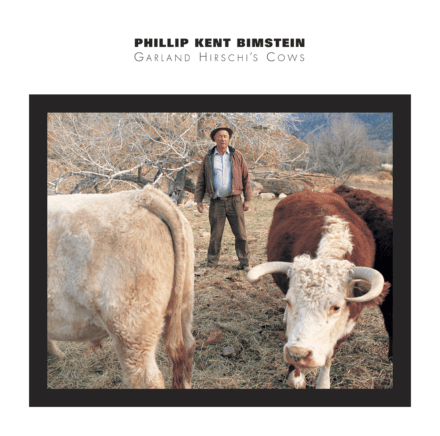
On Bimstein’s first Starkland CD, the beloved piece Garland Hirschi’s Cows generated hundreds of calls to radio stations, cultivated an ardent following, and was eventually anointed “a cult classic” on NPR’s All Things Considered. How could the composer create a worthy followup to that charming work about a Utah farmer discussing his history, his cows, and why they moo?
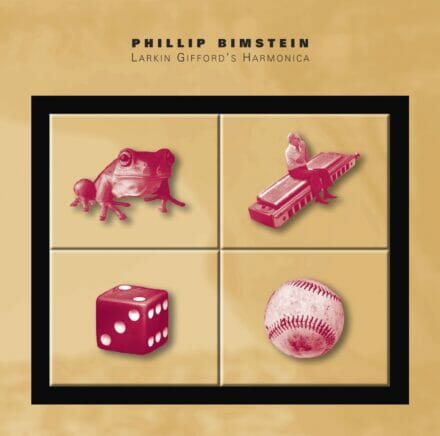
Bimstein responded with Larkin Gifford’s Harmonica, a poignant portrait of the elderly Larkin Gifford, who offers vibrant stories, including his lifelong love of playing the harmonica. Bimstein describes stopping by Larkin and Ruth Gifford’s house one day:
“Ruth invited me in, made me a sandwich, and gave me some fruit and a glass of milk. Then Larkin played harmonica while I accompanied him on the guitar. He was a delightful man with great stories to tell, and he loved playing the harmonica. A few years later I came back and recorded Larkin playing old tunes he had collected from his youth. I listened to his stories about growing up in Springdale in the early 1900s. He remembered his father taking him down to the river and giving him a drink of water from his hand, and buying him his first harmonica when he was eight years old. I deconstructed his harmonica tunes into bits and pieces, and then reassembled them into new music which retains some of the character and tone of Larkin’s playing. I also weaved Larkin’s spoken memories through the patterns in the music.”
Listen to Phillip Bimstein discuss his piece Larkin Gifford’s Harmonica on Weekend Edition at NPR.
Another portrait features the delightful, funny, and genuine Robert Logan, better known as “Bushy Wushy the Beer Man.” Bushy Wushy sold beer in Busch Stadium, home of the St. Louis Cardinals, for more than forty years. Bimstein began The Bushy Wushy Rag by visiting Busch Stadium, recording the crack of the bat from behind home plate, the ball slamming into the catcher’s mitt, and other baseball game sounds. He then combined these sampled sounds with stories told by the charming Bushy Wushy, all tied together with a score for wind quintet. Listeners will also hear echoes of music associated with baseball and St. Louis, such as The Maple Leaf Rag written about 100 years before by Scott Joplin in St. Louis.
Learn more about The Bushy Wushy Rag at PBS’s Continental Harmony site.
Casino serves as a sonic portrait of both an individual and a unique American city. In this informative work, we learn about the dice-caller Tom Martinet, who offers insights into the superstitions and psychologies of gambling, and we learn about the fascination that many have with Las Vegas. Originally trained to be a priest, the philohophizing Martinet has this to say about gambling: ” In the long run, everybody loses.” In addition to the interview with Martinet, Bimstein recorded the percussive sounds of slot machines, roulette wheels, dice, poker chips, coins, cards, and the big wheel. He also simultaneously composed a wind quintet score which grows out of and interacts with Martinet’s voice and the gambling sounds.
Regarding these three musical depictions, Adams notes that Bimstein “has an enviable knack for choosing spoken narratives that reminds me of the filmmaker Errol Morris.”
The CD also offers two instrumental works. Half Moon at Checkerboard Mesa emerges from Bimstein’s fascination with the sounds of the natural environment surrounding his home at Zion National Park in Utah. He recorded the singing of canyon tree frogs, the howls of coyotes, chirping crickets, rocks, thunder, and the sounds of water from the Virgin River. He then shaped and orchestrated these natural sounds into composed music and wrote an interacting score for live oboe. The piece has been performed at the Kennedy Center and Carnegie Hall, and was featured on NPR’s All Things Considered.
The other instrumental work is Rockville Utah 1926, which is based on melodic material from the work Garland Hirschi’s Cows. The title is the place and date of Garland’s birth. The piece is meant to evoke the pastoral and active life of remote rural Utahns at that time, before they had electricity, when they had to grow their own food to survive.
Listen to Phillip Bimstein discuss his music on NPR’s All Things Considered.
Phillip Bimstein
Bimstein resides in Springdale, Utah, where he served two terms as mayor, prompting Outside magazine to call him “America’s only all-natural politician composer.” His “alternative classical” music combines acoustic instruments with found sounds and voices to paint portraits and tell stories. Bimstein’s music has been performed at Lincoln Center, Bang on a Can, and London’s Royal Opera House. In addition to his studies of theory, composition, and orchestration at the Chicago Conservatory and UCLA, Bimstein led the new wave band Phil ‘n’ the Blanks, whose albums and videos were college radio and MTV hits.